Artists
Artists in the Collection
39 artists · Page 2 / 5
Çoban Ressam
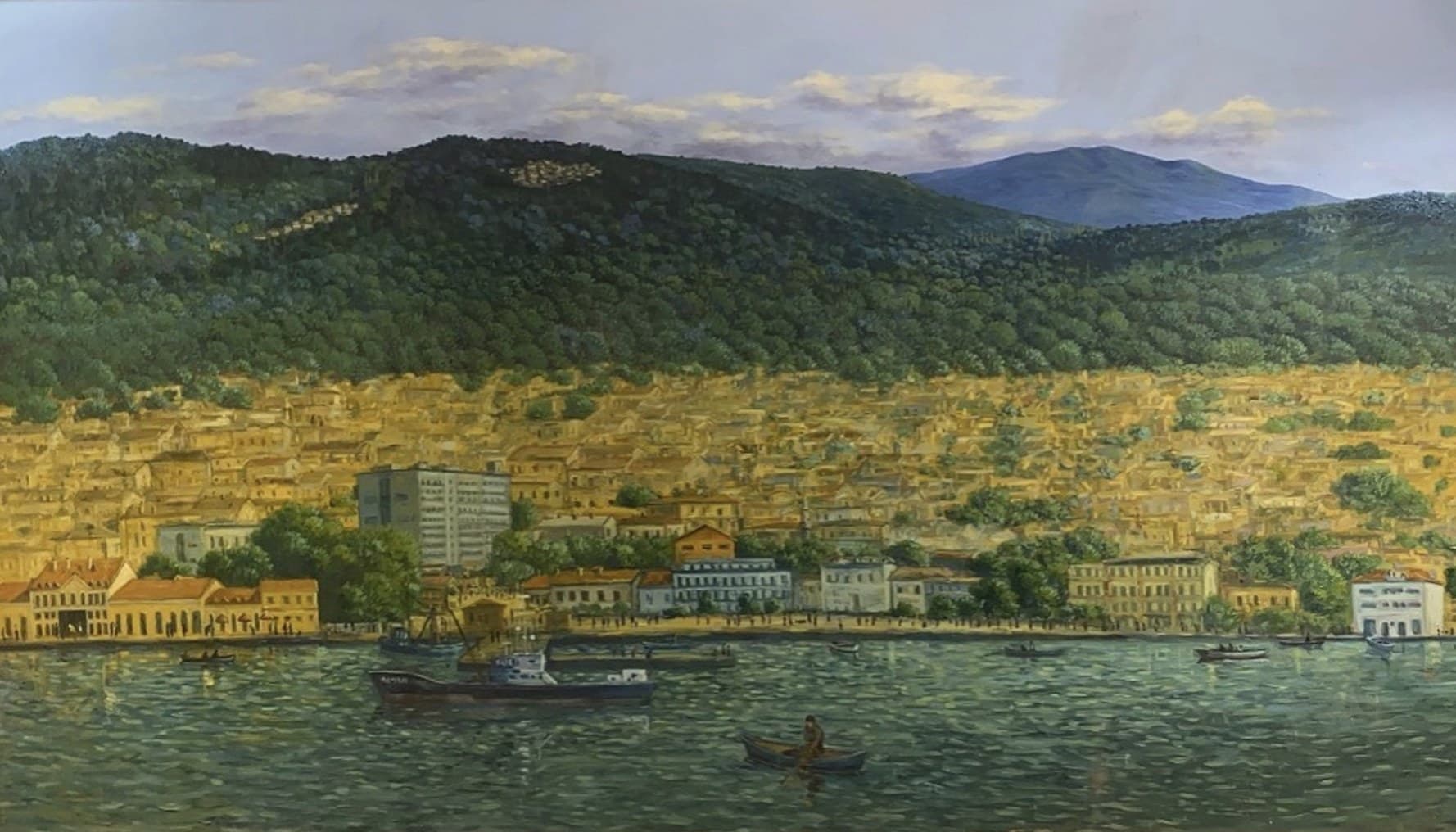
Anatolian landscapes and scenes of rural life; a self-taught manner that takes colour as its vehicle of feeling
Süleyman Şahin (b. 1949), recorded in the archives of the Ankara Museum of Painting and Sculpture under the sobriquet "Çoban Ressam" — the Shepherd Painter — is a self-taught painter of the Anatolian landscape. As a child he herded flocks in Ankara, and it is to that past, and to paintings devoted to rural life, that he owes the name. He held his first exhibition in Ankara in 1968; in 1973 he settled in Bursa, and in 1986 he led the founding of the "Ressamlar Sokağı" — the Painters' Street — in Hisar. His works are held in the collections of the Ankara and Erzurum Museums of Painting and Sculpture, and he continues to work in the village of Kumyaka in Mudanya.
- ·His works are held in the collections of the Ankara and Erzurum Museums of Painting and Sculpture
- ·Led the founding of the "Ressamlar Sokağı" (Painters' Street) in Hisar, Bursa, in 1986
Devrim Erbil
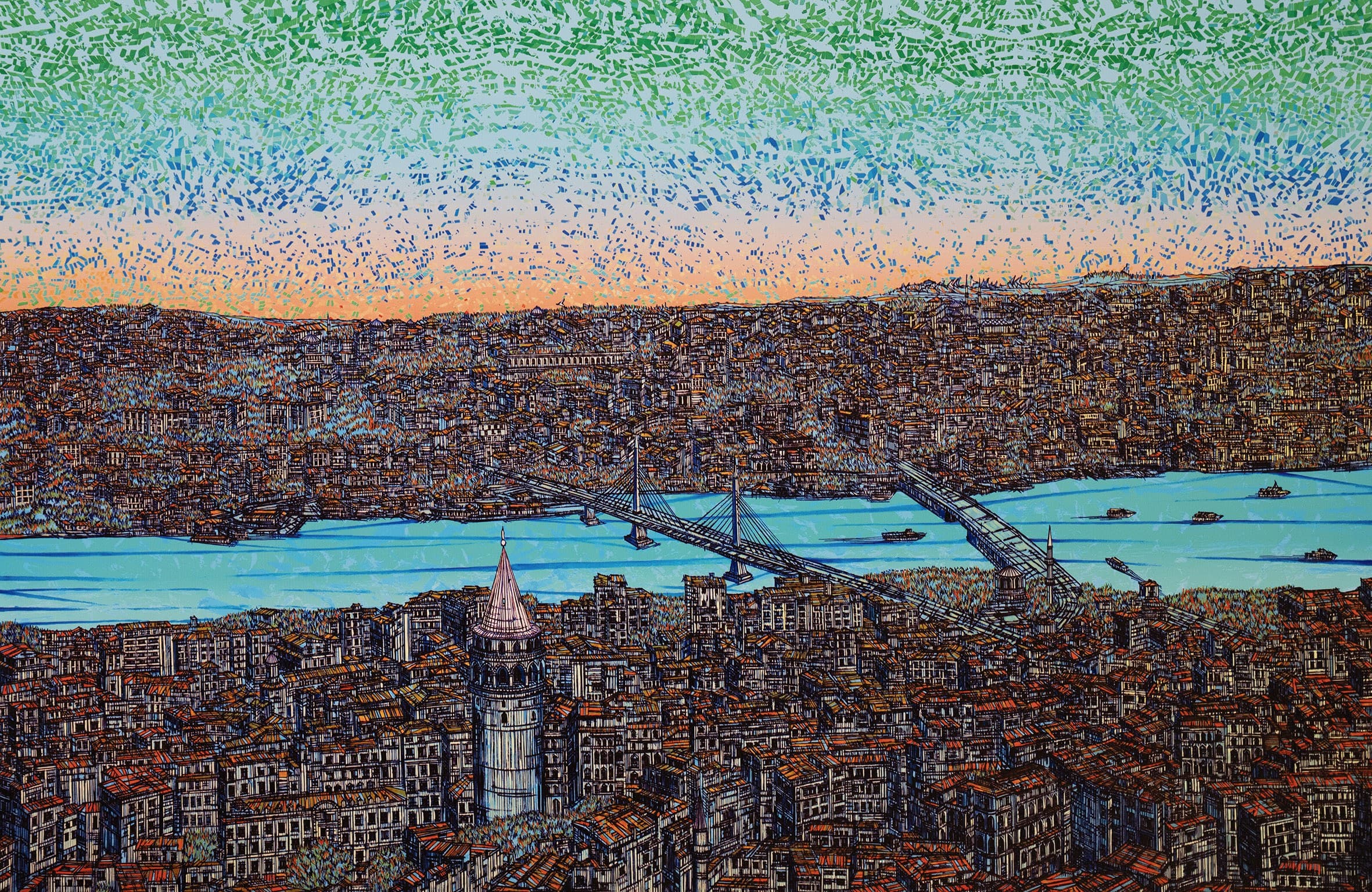
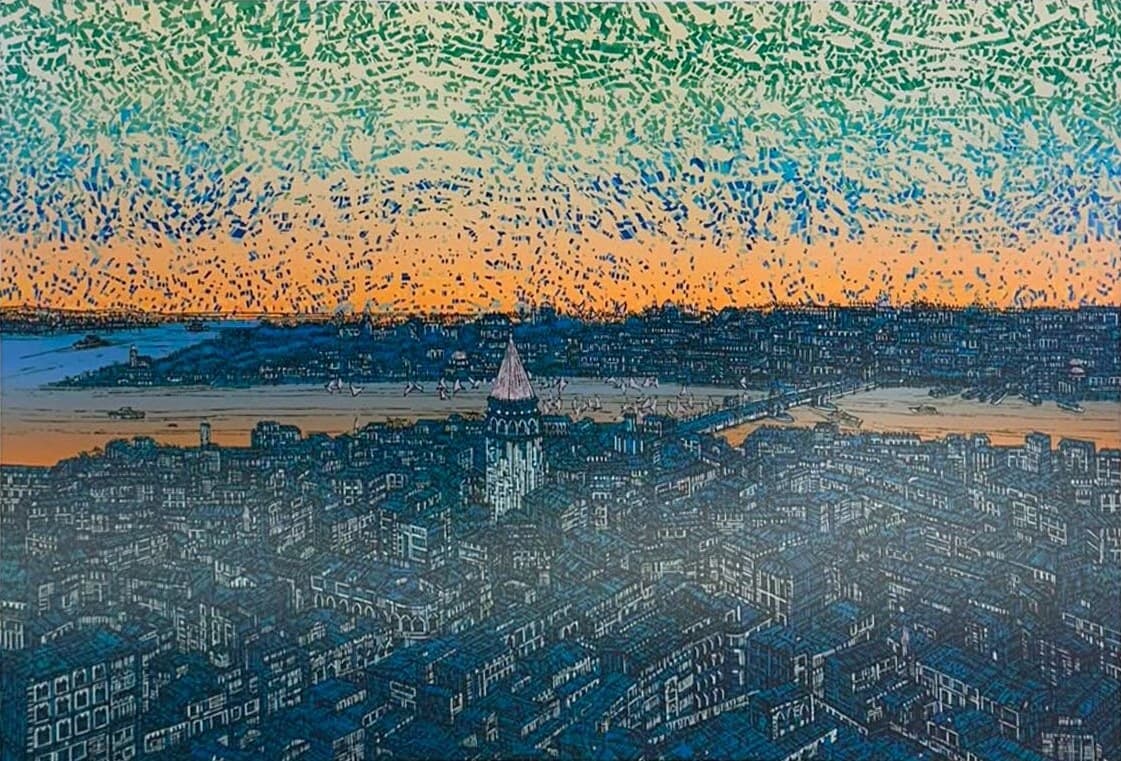
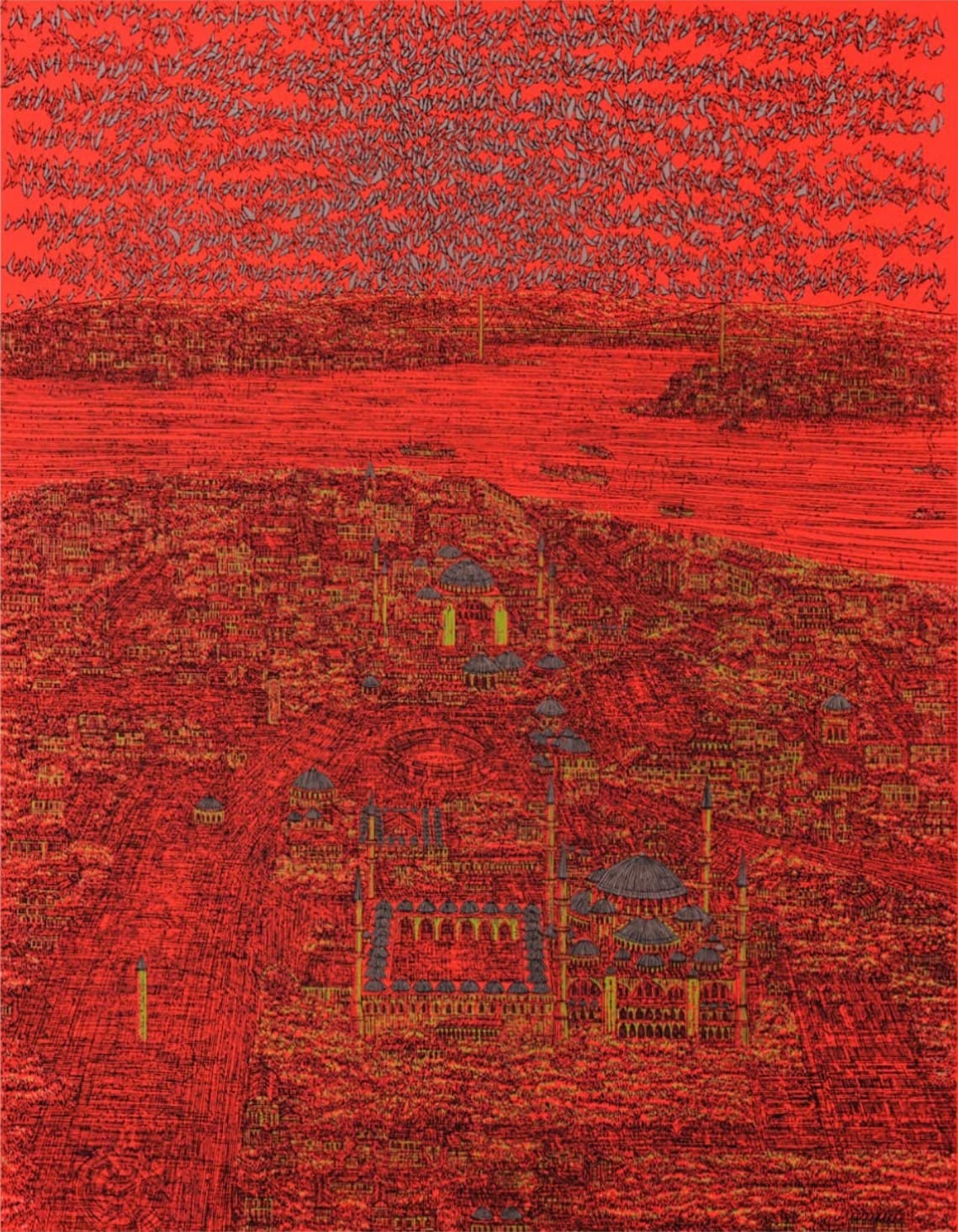
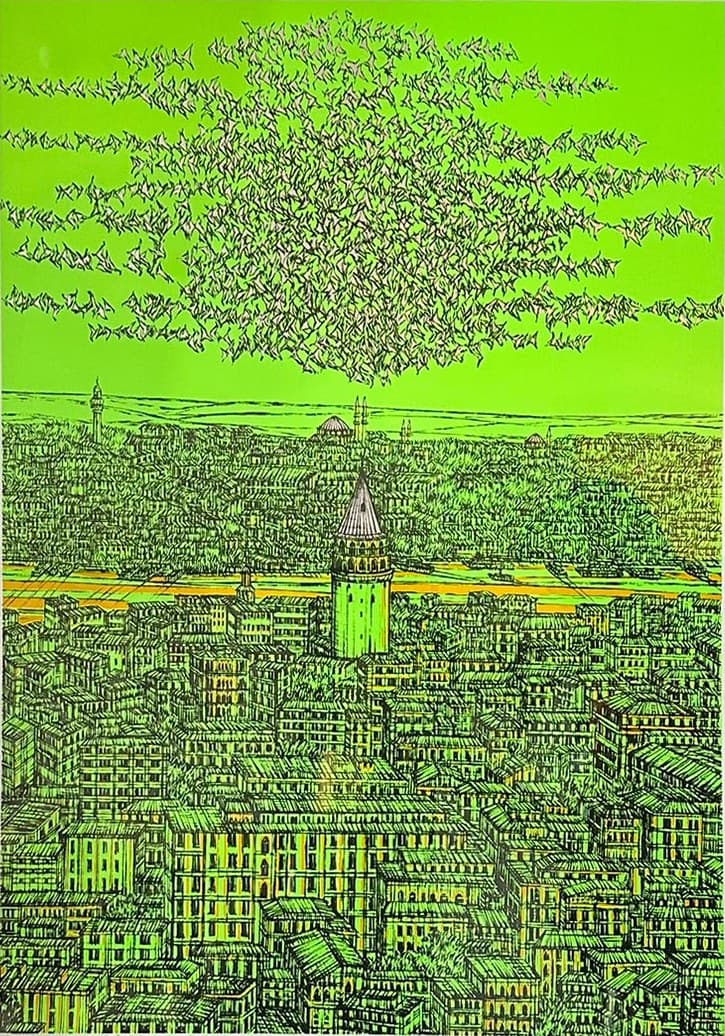
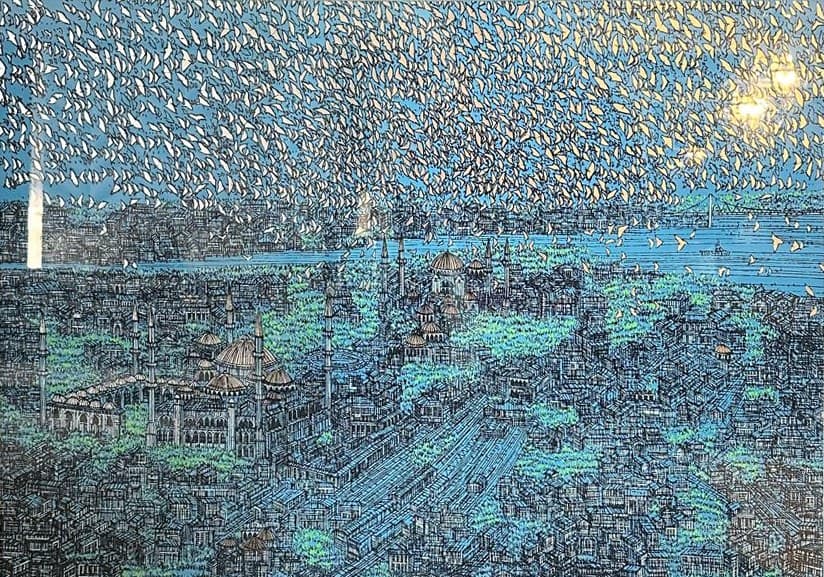
A poetic idiom that reconstructs the panorama of Istanbul through rhythmic, linear abstraction
Devrim Erbil (b. 1937, Uşak) is one of the pioneering figures of contemporary Turkish painting. He graduated from the Painting Department of the İstanbul State Academy of Fine Arts in 1959, having trained under Halil Dikmen and Bedri Rahmi Eyüboğlu, and went on to serve at the Academy for many years as both teacher and administrator. His urban panoramas, which interpret Istanbul through a rhythmic, linear abstraction, remain the most celebrated theme of his art. Named a State Artist in 1991, Erbil is represented in Turkey's foremost museum collections.
- ·State Artist title (1991) and the Presidential Grand Prize for Culture and the Arts (2019)
- ·Works held in the collections of the Painting and Sculpture Museums of Ankara, Istanbul and İzmir
- ·The Devrim Erbil Museum of Contemporary Art opened in his name in Balıkesir in 2004
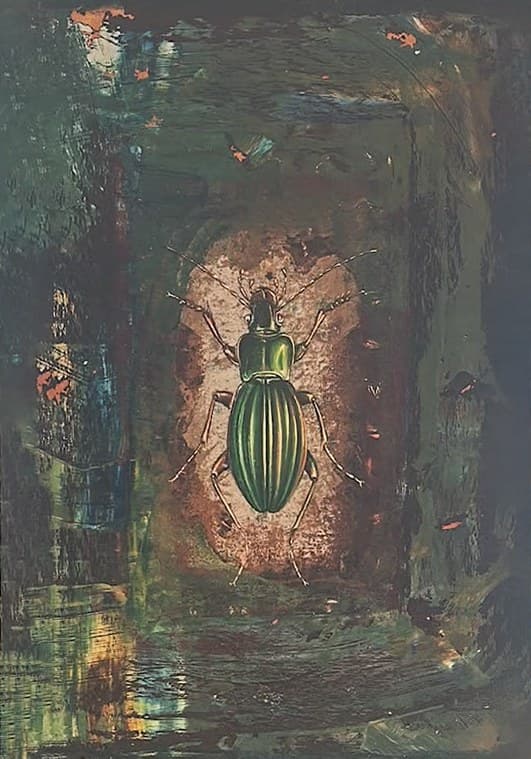
Ergin İnan
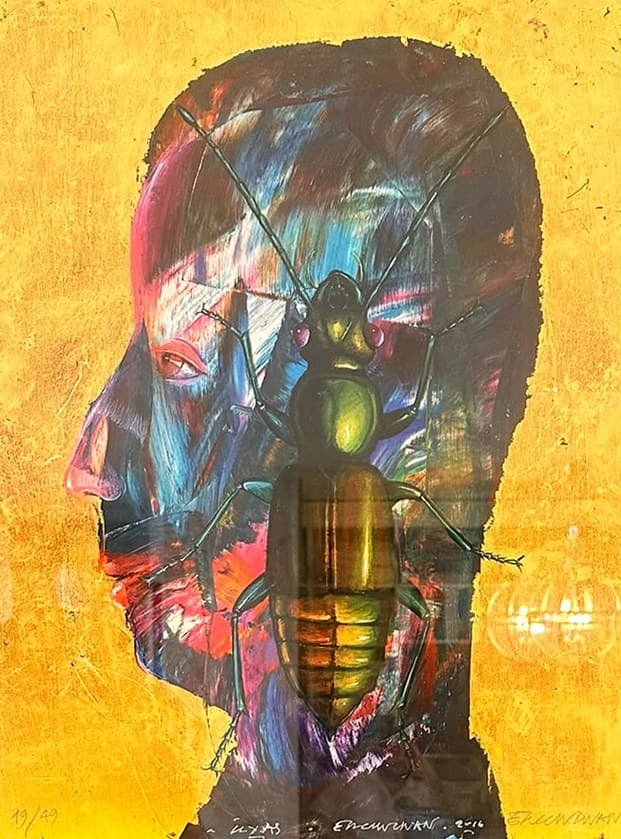
A richly layered pictorial language gathering insect and butterfly imagery, human figures and fragments of script onto a single surface, blending East and West with a metaphysical sensibility
Ergin İnan (b. 1943, Malatya) is among the most internationally recognised figures in contemporary Turkish painting. After graduating from the Painting Department of the Istanbul State School of Applied Fine Arts in 1968, he studied with Emilio Vedova at the Salzburg Summer Academy and, from 1971 to 1973, with Rudi Tröger and Mac Zimmermann at the Munich Academy of Fine Arts; between 1983 and 1987 he continued his work in Berlin on a DAAD fellowship. For many years he served as professor at the Faculty of Fine Arts of Marmara University. In 2010 he was awarded the Presidential Grand Prize for Culture and the Arts.
- ·Recipient of the Presidential Grand Prize for Culture and the Arts (2010) and the Sedat Simavi Visual Arts Award (1984)
- ·Worked in Berlin on the DAAD artists' fellowship between 1983 and 1987
- ·His works are held in the collection of IMOGA — the Istanbul Museum of Graphic Arts
Faruk Cimok
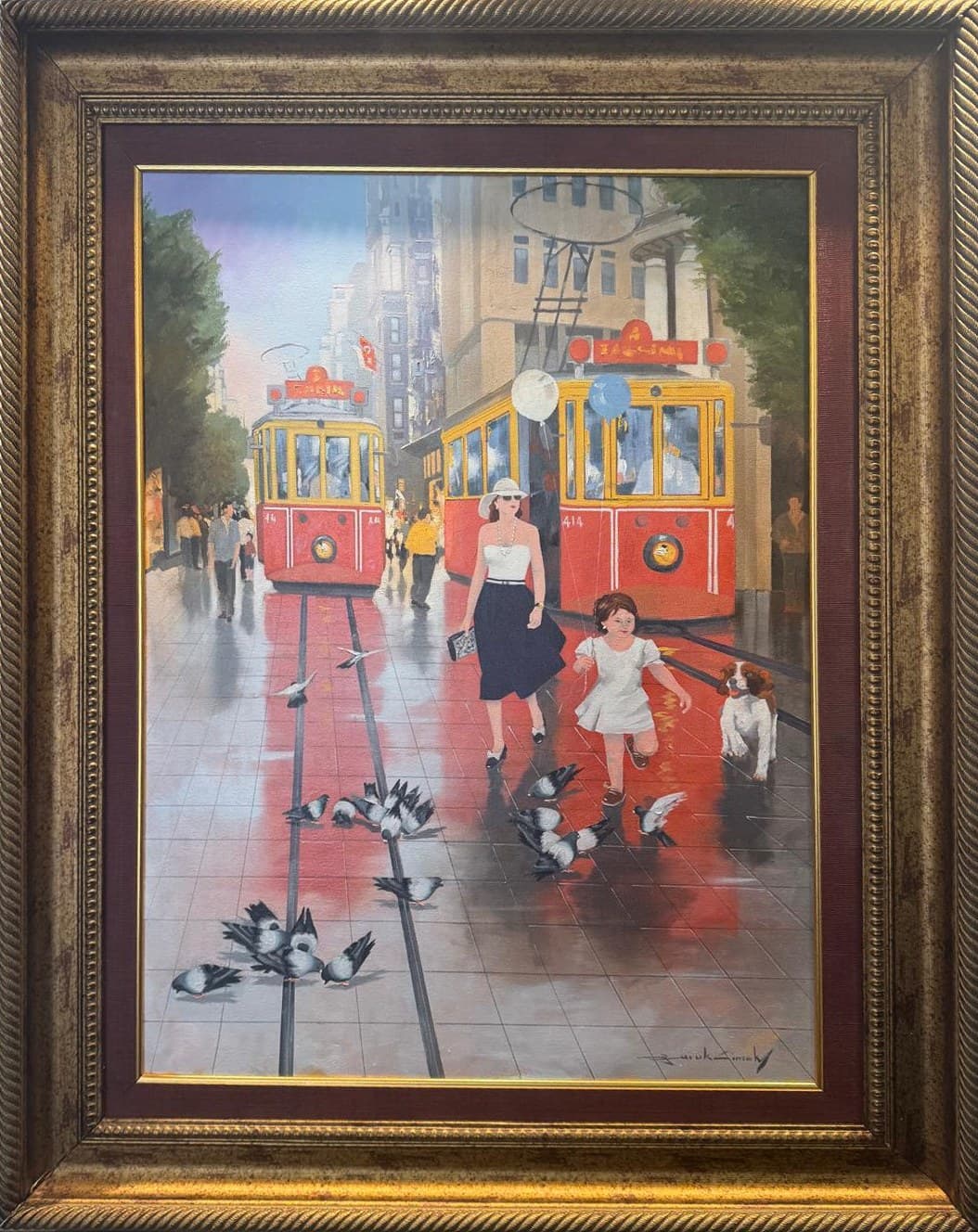
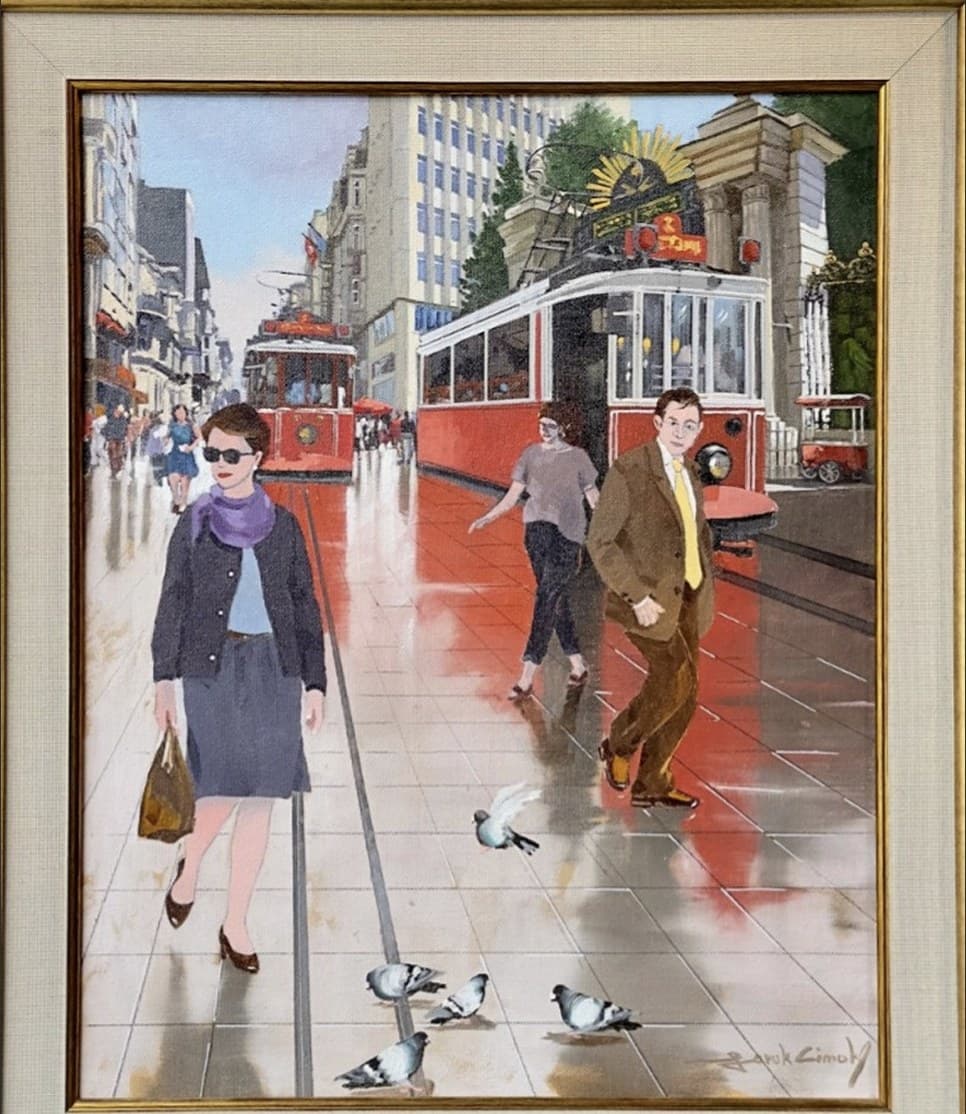
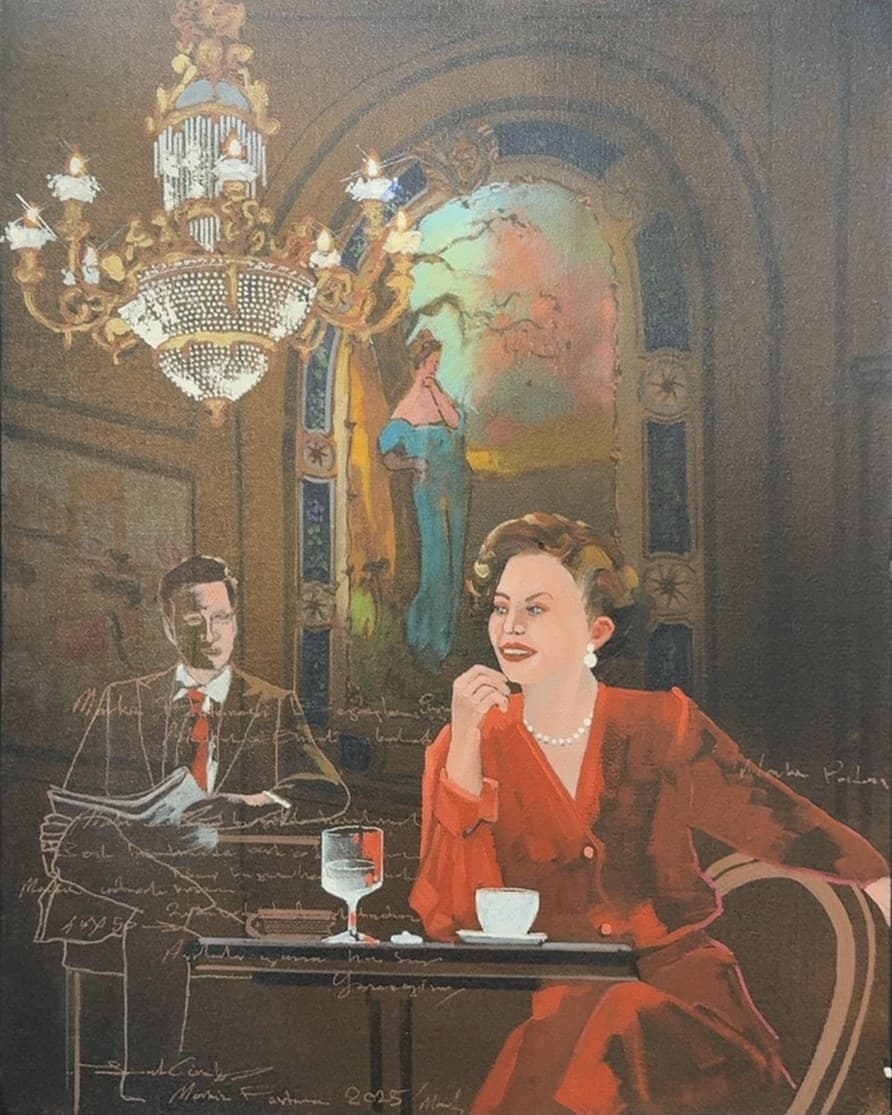
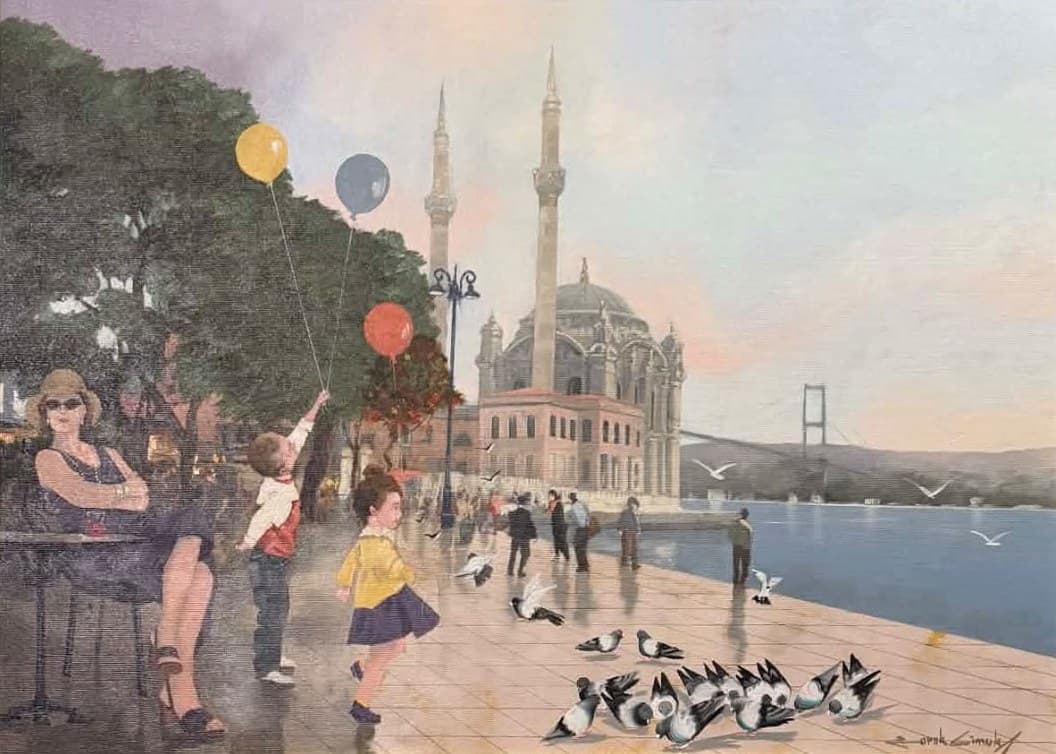
Warm-palette street scenes of Istanbul built from nostalgic trams, pigeons and the reflections of rain-wet pavements
Faruk Cimok (b. 1956, Reyhanlı, Hatay) graduated in 1979 from the Painting Department of the State Academy of Fine Arts (today Mimar Sinan Fine Arts University), opening his first solo exhibition in the same year. His paintings take as their subject the quarters of Istanbul — Beyoğlu, the Çiçek Pasajı, Taksim and Kumkapı — together with nostalgic trams and crowded street scenes glistening after the rain. For the pigeons that recur throughout his compositions, he is known in art circles as the "bird painter" (kuşçu ressam).
- ·Graduated from the Painting Department of the State Academy of Fine Arts in 1979; held his first solo exhibition the same year
- ·Known for his paintings of Istanbul devoted to Beyoğlu, the Çiçek Pasajı, Taksim and Kumkapı
Hale Nurol
A naive, ornamental idiom building fable-like coastal and fortress scenes from stylised curls of wave and cloud
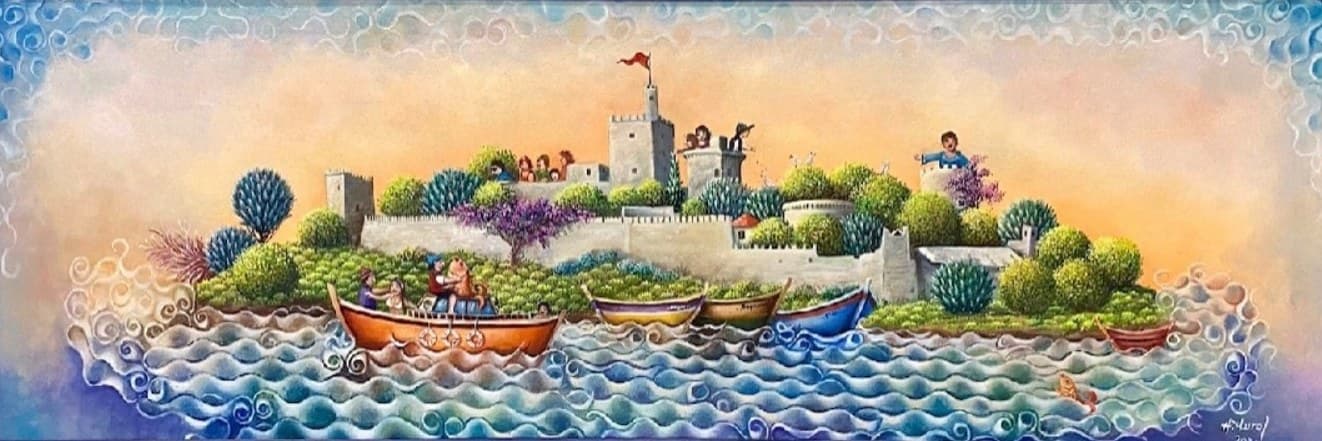
Hale Nurol's work has appeared for years in Turkish auction catalogues; almost all recorded works are signed oils on canvas, among them long, narrow formats. In the work in our collection that elongated format carries a fable-like coastal scene: an island crowned by a fortress, boats drawn up along the shore and waves curling into ornament, painted with a naive and meticulous hand.
Hamit Görele
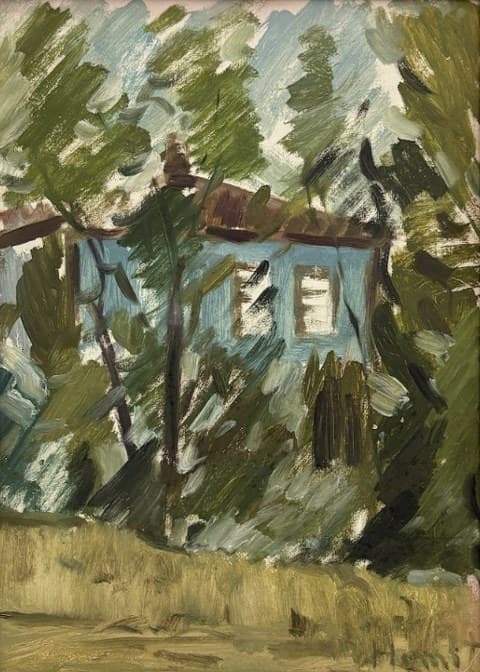
Modern figurative painting nourished by Cubism, foregrounding its geometric construction
Hamit Görele (1900–1980) belongs to the first generation of painters of the Republic. He worked with İbrahim Çallı and Hikmet Onat at the Academy of Fine Arts, graduating in 1928; the European painting competition he won in the same year took him to Paris, where he worked for four years in the studio of André Lhote. On his return he took part in the exhibitions of the Independent Painters and Sculptors Union and assumed its presidency; in 1978 he was one of two painters awarded the State Certificate of Honour. His works are held in the collection of the Istanbul Museum of Painting and Sculpture.
- ·Worked for four years in the studio of André Lhote in Paris
- ·President of the Independent Painters and Sculptors Union (Müstakil Ressamlar ve Heykeltıraşlar Birliği)
- ·State Certificate of Honour (1978)
Hüseyin Bilişik
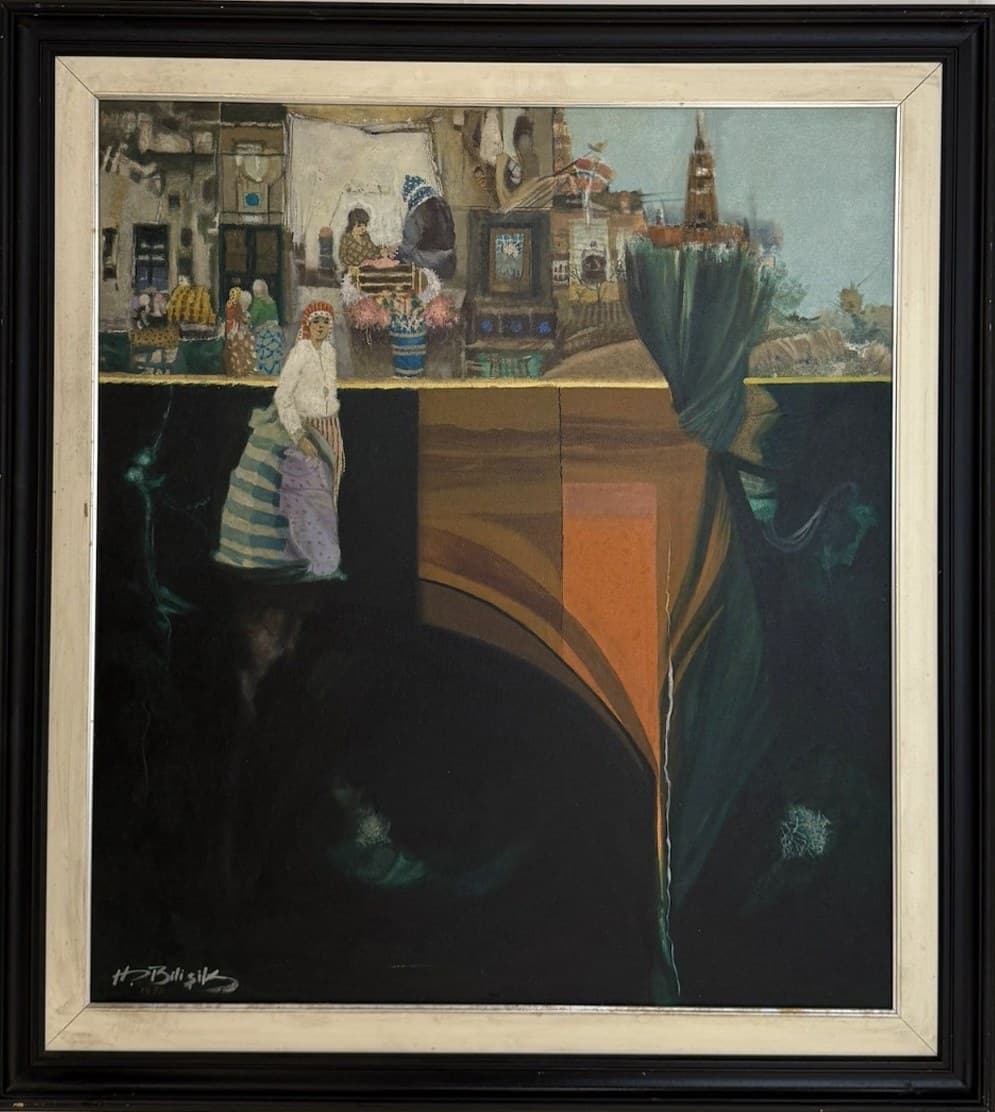
Figurative painting of social content devoted to Anatolia; a palette of earth tones and fields of colour tending towards abstraction
Hüseyin Bilişik (1923, İzmir – 2004) trained at the İstanbul State Academy of Fine Arts, graduating from the studio of Sabri Berkel and working with Nurullah Berk, Cemal Tollu, Zeki Kocamemi and Léopold Lévy. Anatolia stands at the centre of his painting: migration, the harvest, the highland pastures and village life, in a palette dominated by earth browns and the green of the steppe. After the 1980s his compositions resolved into broad fields of colour and drew closer to abstraction. He served as president of the Turkish Painters' Society (1964–1974) and of the Federation of Fine Arts (1967–1970).
- ·Graduated from the studio of Sabri Berkel at the Academy of Fine Arts
- ·President of the Turkish Painters' Society (1964–1974) and of the Federation of Fine Arts (1967–1970)
İbrahim Balaban
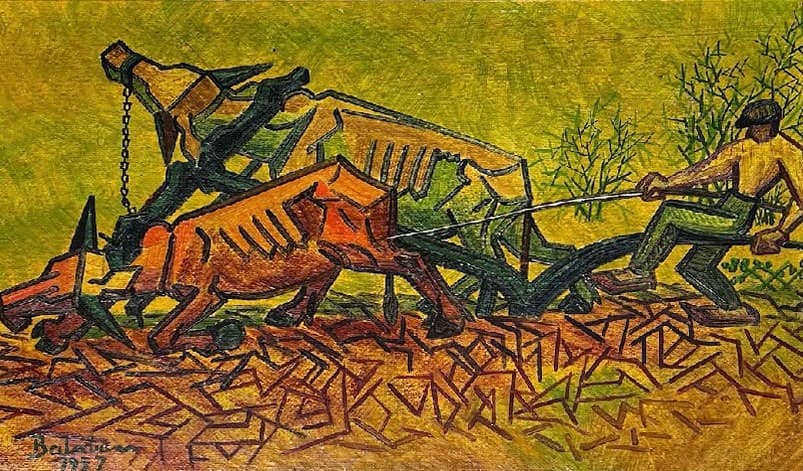
Social realism that builds the labour of the Anatolian peasant from angular forms and warm earth colours
İbrahim Balaban (1921, Bursa – 2019, Istanbul) is among the masters of social realism in Turkish painting. After village school he had no academy training; he came to painting through the encouragement of the poet Nâzım Hikmet, whom he met in Bursa Prison and called his "Poet Father". He opened his first solo exhibition in Istanbul in 1953 and showed more than two thousand works in over fifty exhibitions. The labour and daily life of the Anatolian peasant — oxen at the plough, the threshing floor, weddings and festivals — became his subject, and he recounted his years with Nâzım Hikmet in books including "Nâzım Hikmet'le Yedi Yıl" (Seven Years with Nâzım Hikmet). He was the father of the painter Nazım Balaban, also represented in our collection.
- ·Came to painting with the encouragement of Nâzım Hikmet in Bursa Prison
- ·First solo exhibition in Istanbul, 1953
- ·More than two thousand works shown in over fifty exhibitions